Cosmetic Dentistry and the Importance of Facial Aesthetics
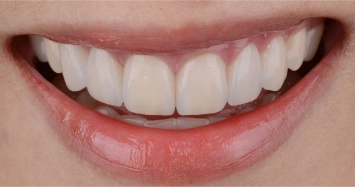
Cosmetic Dentistry is often described in terms of teeth, shade guides, veneers, and smile makeovers. That description is too narrow. In practice, the best cosmetic dental work is never just about teeth. It is about how the teeth relate to the lips, how the lips frame the smile, how the lower face supports expression, and how all of that fits the individual standing in the chair.
A smile can look technically perfect on a model and still look wrong on a patient. I have seen that happen when treatment was planned in isolation, with too much attention on tooth color or tooth length and not enough attention on facial proportions. A bright, uniform set of restorations may impress on a close-up photo, yet feel unnatural in conversation because the shape fights the patient’s lip line, age, or facial character. Good cosmetic treatment should not announce itself from across the room. It should read as healthy, balanced, and believable.
That is why facial aesthetics matter so much in modern cosmetic care. Teeth do not exist in a vacuum. They sit inside a living frame that moves, ages, and communicates emotion every minute of the day.
The smile is part of the face, not a separate project
Patients often arrive asking for whiter teeth, straighter teeth, or a smile that looks like a celebrity’s photograph. Those are understandable starting points, but they rarely represent the whole clinical picture. The human eye does not process teeth alone. It notices harmony. It notices whether the smile fits the face. It notices whether the result looks relaxed or strained.
When planning cosmetic treatment, dentists who focus only on the front teeth can miss what matters most. A patient with a narrow arch, collapsing bite, worn edges, or poor lip support may not benefit from simply placing more porcelain. In some cases, bigger or brighter restorations make the face look harder, older, or less natural. In others, conservative changes to contour and proportion can transform a person’s appearance far more effectively than a dramatic shade change.
Facial aesthetics in dentistry involves reading the face as a system. The forehead, nose, lips, chin, and jaw all shape how a smile is perceived. So do movement and personality. Some patients show a broad smile with full upper lip mobility. Others have a more reserved smile with limited tooth display. Some have strong facial features that suit bolder tooth anatomy. Others need softer line angles and subtler surface texture. There is no universal ideal, only a good fit.
What dentists mean by facial aesthetics
Facial aesthetics is not vanity dressed up in technical language. It is a clinical framework for understanding balance, symmetry, support, and expression. It considers both static features, such as facial proportions at rest, and dynamic features, such as how the lips and cheeks behave when speaking and smiling.
A few elements repeatedly guide treatment planning:
- Tooth display at rest and during smiling
- Lip support and lip fullness
- The relationship between the smile line and the lower lip
- Midline and cant, especially as they relate to the face rather than just the teeth
- The vertical dimension of the lower face, particularly in worn or collapsing bites
These points sound simple, but they carry a great deal of nuance. For example, many patients are concerned about a dental midline that is slightly off. In reality, a minor shift can be almost invisible if the smile remains harmonious with the face. By contrast, a smile that is too flat against a curved lower lip often looks artificial even when every central incisor is perfectly measured.
This is one reason experienced clinicians spend so much time observing before treating. Photographs, video, digital smile design tools, and trial restorations can help, but judgment still matters. Dentistry is full of measurements, yet aesthetic success depends on more than numbers.
Why “perfect teeth” can look unnatural
Social media has changed patient expectations. Many people have seen highly edited before-and-after images featuring very white, very uniform teeth. Those results can be appealing in a narrow context, but they do not always age well on real faces in real life.
Uniformity is not the same as beauty. Natural teeth vary slightly in translucency, contour, texture, and incisal edge character. Faces also carry asymmetry. One lip side may rise higher. One canine may sit slightly more prominent. One side of the mouth may show more in a smile. Trying to erase every variation can create a stiff result.
A common example is over-lengthening the upper central incisors because the patient wants a “younger” smile. Youthful smiles do tend to show more upper tooth structure, but that does not mean longer is always better. If the central incisors become too dominant for the patient’s face, speech can be affected, lip closure can feel awkward, and the smile can start to look forced. The same is true when restorations are made too opaque. Teeth that are bright but lifeless can flatten the face rather than enliven it.
The strongest cosmetic work usually preserves some individuality. It refines rather than replaces. A patient should still look like themselves, only healthier, more rested, and more confident.
The role of age in smile design
Facial aesthetics changes over time. That may sound obvious, but it is often overlooked in cosmetic consultations. What flatters a 25-year-old may not suit a 55-year-old. The issue is not that older patients should accept less attractive treatment. The issue is that attractiveness changes with context.
Younger faces often show more upper incisor at rest, have fuller soft tissue support, and tolerate brighter shades more easily. As people age, the upper lip typically lengthens and tooth display at rest decreases. Wear shortens the incisors. Fine lines around the mouth and changes in skin tone influence how dental shade is perceived. If treatment ignores these realities, the result can feel disconnected from the face.
That does not mean mature patients need dull or aging-looking dentistry. Quite the opposite. Restoring worn edges, correcting bite collapse, and improving support in the lower face can have a striking rejuvenating effect. The key is moderation and proportion. A smile can look refreshed without looking manufactured.
One of the most satisfying cases in cosmetic care is the patient with significant wear who thinks they only need whitening. Once the bite is assessed and the lower facial height restored carefully, the change can be far greater than a color adjustment. The face often appears less strained, the lips sit more naturally, and the patient’s expression softens. People around them usually notice they look better without being able to say exactly why.
Function drives appearance more than patients expect
Cosmetic outcomes are closely tied to function. This is one of the most important truths in dentistry, and one of the easiest to miss if treatment is marketed as purely aesthetic.
A beautiful restoration that chips, feels bulky, alters speech, or creates muscle fatigue is not a success. Similarly, a patient with grinding, bite instability, gum recession, or uneven wear patterns may need careful functional planning before pursuing visible cosmetic changes. In those cases, facial aesthetics and functional dentistry overlap completely.
Take a patient with severe attrition from clenching. Their front teeth may appear short and old, but the deeper issue may be loss of vertical dimension and heavy loading across the dentition. Simply placing veneers on the front teeth might improve the photo for a few months, but it does not solve the force problem. A more responsible plan may involve rebuilding the bite, testing a new jaw position, and then finalizing anterior aesthetics in a stable way.
This is where clinical restraint matters. Not every smile complaint should be solved with porcelain. Orthodontics, periodontal treatment, whitening, edge bonding, bite equilibration, or restorative rehabilitation may each play a role depending on the case. The face benefits most when the treatment plan Cosmetic Dentistry respects biology and mechanics.
Lip support, profile, and the overlooked lower third
When people think about facial aesthetics, they often focus on the front view. Dentists also have to think from the side. Profile matters. Lip support matters. Chin projection and the way the upper and lower lips meet at rest matter.
Teeth help support soft tissue. If anterior teeth are too far back, too small, or too worn, the lips can look less supported. This can make the mouth appear older or more collapsed. On the other hand, if restorations are overbuilt, the lips may protrude unnaturally, speech may sound altered, and the patient may feel constantly aware of the work.
The lower third of the face deserves special attention. In patients with heavy wear, reduced vertical dimension can make the distance between nose and chin appear compressed. Deepened folds, reduced tooth display, and a tired facial expression often accompany that pattern. Thoughtful restorative treatment can improve these features, but only when changes are tested carefully. Pushing the bite open too far or too fast can create discomfort and adaptation problems.
The public sometimes assumes cosmetic changes are superficial. In many cases, restoring tooth form and facial support is deeply structural. It affects expression, speech, and how the face rests when not smiling.
Smile design is part art, part diagnosis
Digital tools have improved communication tremendously. Mockups, facial scans, and smile simulations can help patients visualize options and help clinicians work more predictably. Still, no software can replace trained eyes and patient-specific judgment.
A digital preview may suggest a lovely tooth arrangement on screen, but the true test comes when the patient speaks, laughs, and sees themselves from different angles. That is why provisional restorations and mockups are so valuable. They allow real-world evaluation before a definitive commitment is made.
Several practical questions often matter more than patients expect:
- Does the smile still look natural in casual conversation, not just a posed photo?
- Are the tooth edges appropriate when the patient says words with “f” and “v” sounds?
- Does the patient feel their lips close comfortably at rest?
- Is the brightness believable under daylight, office light, and indoor evening light?
- Does the result match the patient’s personality and professional setting?
A patient who is a trial lawyer, teacher, actor, or physician may have different aesthetic and functional priorities than someone who prefers minimal visible change. The same objective smile can feel too bold for one patient and too conservative for another. Cosmetic Dentistry works best when the dentist can hear what the patient is asking for beneath the words. “I want white teeth” often means “I want to look healthier.” “I hate my smile” may mean “I feel older than I am.” Those distinctions influence every design decision.
The difference between enhancement and over-treatment
One of the biggest ethical issues in cosmetic care is over-treatment. Healthy enamel is valuable. Once removed, it does not grow back. That fact should temper every cosmetic recommendation.
There are many situations where conservative care can produce an excellent result. Whitening, enamel reshaping, composite bonding, and orthodontic alignment often improve smile aesthetics with less biological cost than aggressive restorative work. Veneers and crowns have an important place, but they should be used thoughtfully, not as a default.
Over-treatment tends to show up in a few familiar ways. Teeth are prepared more heavily than necessary. Restorations are made too opaque and too white. Every small irregularity is erased. Gingival architecture is ignored. The smile becomes conspicuous for the wrong reasons.
Patients benefit from understanding the trade-off. The “big reveal” style of cosmetic marketing can make treatment seem instant and simple. Real life is different. Every intervention carries maintenance, replacement cycles, and biological consequences. Porcelain can be beautiful and durable, but it is not magic. Bonded edges stain and need upkeep. Whitening fades. Soft tissue changes over time. Bite forces do not disappear because a case photographs well on the day of delivery.
The most trustworthy cosmetic dentists are usually the ones willing to say no, or at least not yet.
Gum aesthetics and the frame around the teeth
Teeth get most of the attention, yet gums often determine whether a smile looks polished or awkward. Uneven gingival margins, inflammation, recession, or excessive gingival display can affect the appearance of even very attractive teeth.
Facial aesthetics and gum aesthetics intersect in subtle ways. A patient with a high smile line reveals much more gingival architecture, so small asymmetries become more important. A patient with thicker lip coverage may not need the same level of soft tissue refinement to achieve a pleasing result. Tissue biotype also matters. Thin, delicate gum tissue behaves differently from thick tissue in both healing and long-term stability.
There is also a psychological component. Patients who focus on “small teeth” often actually have altered passive eruption, where more gum is visible and the teeth appear shorter than they really are. In the right case, periodontal contouring or crown lengthening can improve proportions substantially. In another case, orthodontic intrusion, restorative reshaping, or simply accepting a bit of gingival display may be the better path. Again, facial context guides the decision.
Communication matters as much as technique
Aesthetic dentistry can fail even when the technical work is sound if communication is poor. Patients may not know how to describe what they dislike. Dentists may assume that symmetry and whiteness are always the goal. Labs may receive inadequate instructions. The result is a mismatch between expectations and outcome.
The consultation phase deserves more time than many practices allow. Good conversations cover not only the visual goal but also the patient’s tolerance for maintenance, budget, timeline, and appetite for irreversible treatment. Photos of smiles the patient likes can help, but they should be used carefully. A smile that looks excellent on one face may look completely wrong on another.
It also helps to discuss what the patient does not want. Many people fear the “too fake” look more than they fear small imperfections. That preference affects shade selection, contour, translucency, and surface texture. Some of the best compliments patients receive after treatment are not “your veneers are amazing,” but “you look well” or “you look younger” or “something is different and I can’t place it.”
That kind of response usually reflects balanced work, the kind that supports the face instead of overwhelming it.
Choosing treatment with the whole face in mind
The best cosmetic plans are rarely the most aggressive ones. They are the ones that solve the right problem at the right scale. Sometimes that means a full rehabilitation. Sometimes it means whitening and small edge bonding. Sometimes it means doing orthodontics first and porcelain later, or discovering that no porcelain is needed at all.
The central question should always be whether the proposed treatment improves harmony. Harmony between teeth and lips. Harmony between smile and face. Harmony between appearance and function. Harmony between the patient’s goals and the biological cost of achieving them.
Cosmetic Dentistry has advanced significantly over the past two decades. Materials are better. Adhesive techniques are more refined. Digital planning is more accessible. Those are real gains. Yet the deeper principle remains unchanged. A beautiful dental result is not created by making teeth look expensive. It is created by understanding how the mouth contributes to the whole face, and then making decisions that respect that relationship.
When that happens, the final result does not look like a cosmetic procedure. It looks like the patient at their best.
Toothworks of Bakersfield, Dentist and Orthodontist
1030 H St #1, Bakersfield, CA 93304, United States
+1 661-323-9421
FAQ About Cosmetic Dentistry
Is bonding better than veneers?
Neither option is best for everyone. Composite bonding can address small chips, gaps, or shape concerns and is generally easier to repair. Porcelain veneers may offer greater resistance to staining and wear, but often require removal of some enamel. A dentist should assess your oral health, bite, goals, and budget before recommending treatment.
How long will dental bonding last?
Bonding commonly lasts about three to ten years before it needs repair or replacement, though this varies with the location and amount of bonding, your bite, and daily habits. Regular dental visits, good oral hygiene, and avoiding chewing hard objects can help protect it. Ask your dentist what lifespan is realistic for your particular treatment.
What are the risks of teeth whitening?
Whitening can cause temporary tooth sensitivity and gum irritation. Overuse or incorrect use may damage teeth or gums, and whitening does not change the color of existing crowns, veneers, or fillings. Have a dentist assess your teeth and gums, and follow the recommended product directions and treatment schedule.